Personal Finance • Financial Freedom • Wealth Building
Retired Civil Servant Reveals a 7-Step Money Reset System That Helps Nigerians Who Earn But Never Get Ahead Finally Build Real Wealth — Starting With Their Very Next Salary

Ngozi Obi, author of The Total Money Makeover — Nigerian Edition
If you have ever sat down after payday and wondered where all the money went — read every word on this page.
If you earn a salary every month but somehow always end up broke before the next one arrives — this was written for you.
If you have tried budgeting, tried saving, tried cutting expenses — and still, every month, you are starting from zero — do not close this tab.
You wake up on payday and for one beautiful hour, the account looks good. You feel it. That brief, quiet rush of relief.
Then the alerts begin.
Rent. School fees. Generator fuel. Data. Church offering. The relative who has been calling since Tuesday. The loan app deducting automatically before you even touch the money.
By evening of payday, you are already calculating how to survive until month end.
This cannot be life. I am working too hard for this.
You have heard the advice. Spend less. Save 20%. Invest. You have nodded along at seminars. You have saved motivational posts on Instagram. You may have even bought a budget planner that lasted eleven days.
But nothing changes. The salary keeps coming. The poverty keeps staying.
And the worst part is not the empty account.
The worst part is what it is doing to everything else. The arguments with your partner about money. The shame of borrowing from colleagues. The embarrassment of sending your child to school with incomplete fees. The exhaustion of pretending to people that everything is fine.
You are not lazy. You are not irresponsible. You are not bad with money by nature.
You just never had a plan that actually worked. A real one. Built for your real life, your real salary, and the real Nigeria you are living in.
“I know. Because I carried it too. For eight long years, I earned and spent and survived and started over. Until one evening in Lagos, everything changed.”
My Name Is Ngozi Obi.

I am not a financial adviser. Not a banker. Not an economist with a Masters degree in wealth management.
I am just a woman who spent eight years earning a decent salary and having absolutely nothing to show for it.
I grew up in Enugu. Moved to Lagos after NYSC. Got a decent job in a logistics company in Ikeja. By the standards of many people around me, I was doing fine. I was earning. I had a job title. I wore corporate clothes.
But inside that bank account? Every month was a war.
I earned ₦180,000 a month at my peak. That is not small money. And yet, by the third week of every month, I was borrowing. From friends. From Fairmoney. From Branch. From my younger sister who earned less than me but somehow managed better.
I tried everything I was told to try. Excel spreadsheets. The 50-30-20 rule. A savings challenge from Twitter. A financial coach on Instagram who charged me ₦15,000 for a PDF that told me to “track my expenses.”
Nothing worked. Because none of it was built for the life I was actually living.
Nobody accounted for the fact that in Nigeria, your salary is not just yours. You have a mother in the village. A younger sibling in school. A church levy. A colleague whose mother just died and you must contribute. A landlord who does not accept excuses.
Western financial advice assumes you live alone in a flat with no obligations to anyone but yourself. That is not most of our lives.
And so I kept failing. Month after month. Year after year. Earning and losing. Earning and losing. While quietly wondering if this was simply my destiny.
The Evening That Changed My Financial Life Forever
It was a Thursday evening. Our women’s fellowship at Living Faith Church, Surulere.
Every last Thursday of the month, the women gathered. It was a small group — maybe thirty of us. We prayed, we shared, we encouraged each other. I had been attending for two years by then.
I loved the fellowship. But that particular Thursday, I almost did not go. I was sitting in my room, staring at my bank app, trying to understand how my salary — credited four days earlier — had already reduced by two-thirds. I was exhausted. Embarrassed. Defeated.
My husband had asked that morning how much was left. I lied and said “enough.”
I went to fellowship because I needed somewhere to be that was not inside my own head.
There is a woman in our fellowship. Mama Chidinma. She is 72 years old. Retired federal civil servant. Spent 35 years in the Ministry of Finance in Abuja before relocating to Lagos after her husband passed. Tiny woman. Sharp eyes. The kind of woman who knows things.
That evening, after prayers, I sat in the corner and stared at my phone. Calculating. Rearranging. Hoping numbers would somehow become different if I looked at them long enough.
I did not realize she had noticed.
As everyone was leaving, Mama Chidinma touched my arm.
“Come and sit with me for a small moment,” she said.
And something in her voice made me follow.
We sat on two plastic chairs near the window. The hall was almost empty. A junior usher was sweeping the other end.
She looked at me quietly for a moment. Then she asked one question.
“How long have you been fighting with money?”
I felt something crack open inside my chest.
I had never said it out loud to anyone. That I was struggling. That despite the job and the title and the corporate clothes, I was one emergency away from complete collapse. That my marriage was beginning to show fractures made entirely of financial stress. That I cried in the bathroom sometimes because I did not know how to explain to my husband why there was never anything left.
I have never been more ashamed in my life than I was in that moment, opening my mouth and letting the truth come out.
The Discovery That Changed Everything
Mama Chidinma did not look shocked. She did not look sorry for me either. She just nodded slowly. As if she had heard this story a hundred times and knew exactly where it was going.
Then she said the five words I needed to hear more than any other words I had ever been told about money.
“You are not bad with money. You just do not have a system.”
I started crying. Not the polite kind. The real kind. Eight years of shame coming out at once in a church hall in Surulere while a junior usher swept the floor somewhere behind us.
She handed me a small handkerchief from her bag. She waited for me to finish. And then she began to talk.
She spoke for almost an hour. I barely moved.
The Big Idea — Why Everything You Have Tried Has Failed
Here is the truth that no budgeting app, no savings challenge, no Instagram financial coach will tell you:
Your money problem is not a discipline problem. It is a structural problem.
When money enters your account without a pre-assigned plan, your brain treats it as available. And in our society — where family obligations, emergencies, social pressure, and loan app deductions are constant — available money does not last.
The solution is not to “try harder.” The solution is to build a structure where the money is already allocated before you can spend it on the wrong things. Where your savings move automatically before temptation arrives. Where your family obligations are planned for, not panicked about. Where your debt is being systematically destroyed, not randomly attacked.
This is what a real money system does. And once it is in place, it works whether you are feeling disciplined or not — because the structure is doing the work for you.
I sat with that for a long moment. Doing the maths in my head. All the months. All the years. All the money that had passed through my hands with no assignment. All the times I had told myself I would do better next month. And never did. Because I had no system. Only good intentions.
It took one woman, in two plastic chairs near a church window, to tell me what was actually happening.
She then walked me through a simple, 7-step method. Each step built on the last. It was not complicated. It did not require a high salary or a finance degree. It was built specifically for the way money actually moves in Nigerian households — with all the cultural obligations, the family pressure, the unpredictable expenses, and the realities of living in an economy that does not forgive mistakes.
The First Week: Nothing
I went home that night and wrote down everything Mama Chidinma had told me. Filled two pages of a notebook.
When my salary arrived on the 28th, I followed the steps. Assigned every naira before I spent a single kobo. Moved my savings first. Separated my family obligation fund. Allocated my debt repayment. Set a hard limit for flexible expenses.
Day 1 was fine. I felt in control for the first time in years.
Day 2. Fine.
Day 3. A relative called. I checked the “family obligations” envelope. The money was already there. I helped without panicking. Without borrowing. Without rearranging everything else.
Day 4. I almost broke the system. A sale on Instagram. Something I had been wanting for months. I checked the budget. It was not in the plan. I closed the app. For the first time in my life, I was not white-knuckling it. The structure held me.
Day 5: The First Sign
The savings were still there. All of them. Untouched.
It sounds small. But if you have spent years watching your “savings” disappear before the month ends, seeing them sitting there on Day 5 feels like a miracle.
Something shifted in my chest. A small loosening. Like a knot I had forgotten I was holding beginning to unravel.
Day 10. Day 15. Then Something Broke Open.
By Day 15, I was halfway through the month and still in budget. That had never happened before. Not in eight years of working.
By Day 21, I made a loan repayment without borrowing from someone else to do it. For the first time, I was paying a debt with my own money, not shuffling it from one creditor to another.
And then — on Day 26 — I did something that still gets me when I think about it.
I forgot to check my account.
I had spent eight years checking my bank app compulsively. Multiple times a day. That low-grade anxiety was so constant I had stopped noticing it. And on Day 26, for the first time, I simply forgot to check. Because I already knew the money was there. I had given it an assignment. It was doing its job.
But the real test was yet to come.
The Night My Husband Saw Something Different in Me
End of month. A Friday evening. My husband and I sat down for our monthly money conversation. The one we had been having for years that always ended in tension. Always ended with one of us going quiet and the other pretending everything was fine.
I pulled out my notebook.
I showed him everything. Every naira accounted for. The savings sitting untouched. The debt repayment made. The family obligation handled. Money left over going into next month’s buffer — a thing that had literally never existed in our household before.
He went very quiet.
Then he asked, “How?”
And I explained the system.
He sat back and looked at me differently. Not like I had done something impressive. More like he recognised something. Like he was seeing me again for the first time in a long time.
“I thought we were always going to be like this,” he said quietly. “I thought this was just how it was for us.”
I cried after he fell asleep that night. Not from sadness. From the weight of what we had almost accepted as permanent. The arguments that were never really about money — they were about fear. About not knowing if we were going to be okay. About the particular exhaustion of two people trying to hold everything together without a plan.
That night, for the first time in our marriage, I went to bed with a full account, a clear plan, and a husband who had stopped looking at me like money was a problem we could not solve together. The system had not just fixed our finances. It had given us back something we did not even realise money stress had quietly taken away.
I Did Not Plan to Tell Anyone
Three months after that night in church, a friend mentioned she was drowning in the exact same way I had been. Same salary shame. Same month-end panic. Same loan app spiral.
I sent her everything. The full system. Step by step.
She sent me a voice note at the end of her first month. Crying. In the good way.
She shared it with her cousin. Her cousin shared it with her work colleague. By mouth and by WhatsApp, the system spread. Woman to woman. Man to man. From Lagos to Abuja to London to Toronto.
Here is what they told me:
Adaeze M., 31
“I earn ₦220,000 a month and for four years I could not tell you where it went. After following the system for 60 days, I had ₦47,000 in savings for the first time in my adult life. I looked at that number every morning for a week. I could not believe it was real.”
Emeka T., 38
“I had four loan apps and I was borrowing from one to pay another. Every month. After 45 days on this system, I closed two loan apps. After 90 days, I closed a third. My wife and I had our first honest money conversation in six years. She cried. I cried. We both knew it was going to be okay for the first time.”
Abena K., 27
“I followed everything in the guide even though I am in Ghana. The principles are exactly the same for us. By month two I had built a ₵3,000 emergency fund. My mother was sick in month three and I paid the hospital bill from savings. No borrowing. No begging. I cannot describe what that felt like.”
Chidi & Amaka O., 34 & 32
“We earn in pounds and somehow we were always broke. Once we stopped treating remittances as emergencies and started treating them as fixed expenses, everything stabilised. We sent our first Christmas contribution home this year from savings, not from credit cards.”
Funmi A., 43
“I am a business owner so I kept telling myself budgeting was not for me. The system still worked. For the first time in twelve years of running my business, I have three months of operating expenses saved as a buffer. My business has stopped feeling like a gambling game.”
Kofi M., 29
“I used to think I just needed to earn more. Then I got promoted. Still broke. This guide showed me that income level is not the problem. Structure is the problem. Three months later I have Ksh 45,000 in savings and I have not touched my emergency fund once.”
Same system. Same steps. Same results.
Why I Am Sharing This
Three months after that fellowship evening, I went back to Mama Chidinma. I told her what had happened. The savings. The cleared debts. My husband’s face when he saw the budget at month end. The friends I had already shared the system with and the voice notes they had sent me.
She listened and laughed. Not surprised at all.
I asked her if I could write it all down. Document everything she had taught me. Make it available to other people who were fighting the same fight without a map.
She was quiet for a moment. Then she nodded.
I spent the next four months writing. Verifying every step. Testing each principle with women and men across different income levels, different family situations, different parts of Nigeria and the diaspora. Everything confirmed. Every principle survived contact with real life.
Now Available
The Total Money Makeover — Nigerian Edition
A Proven 7-Step Plan for Financial Peace on a Real Salary
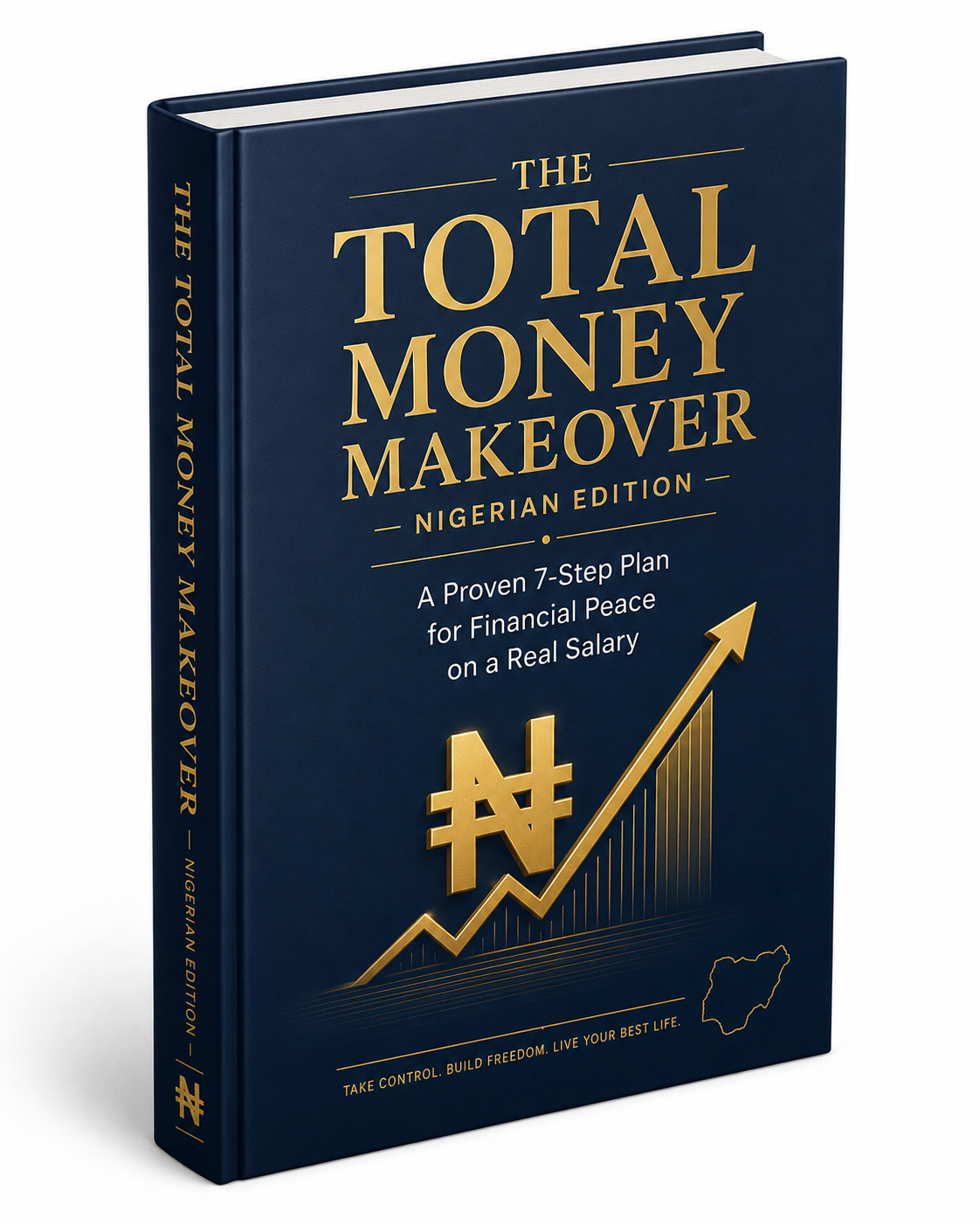
Everything Mama Chidinma taught me — documented, structured, verified, and written in plain language so you can start applying it from your very next salary.
- The 7-Step Nigerian Money Reset Framework — The complete system for assigning every naira a job before it arrives. Built for Nigerian salary structures, family obligations, and economic realities. (Pg. 8)
- The Zero-Balance Budget Method, African Edition — How to build a monthly spending plan that accounts for all your real obligations. Includes templates for salaried workers, business owners, and irregular earners. (Pg. 22)
- The Debt Destruction Sequence — The exact order in which to attack your debts to get free fastest — including loan apps, informal loans, and family debts. Plus: how to communicate with creditors without destroying relationships. (Pg. 41)
- The Family Obligation Planner — How to plan and fund your family obligations so they never blow your budget again. (Pg. 56)
- The Emergency Fund Blueprint — How to build your first ₦50,000 emergency fund even on a tight salary — and why this single step stops the loan app spiral forever. (Pg. 67)
- The Savings Automation System — The psychological trick that makes saving automatic and effortless. Works with any Nigerian bank. Takes 15 minutes to set up. (Pg. 76)
- The 90-Day Financial Peace Roadmap — Exactly what to do in Month 1, Month 2, and Month 3. With check-ins, milestones, and adjustments for when life does not go to plan. (Pg. 88)
You do not need to travel anywhere. You do not need a special bank account. You do not need a high salary. Everything in this guide can be applied starting tonight. Total cost of any supplementary materials? Less than ₦2,000.
Compare That to What You Have Already Been Spending
✗ Budgeting apps and planners: ₦2,000–₦8,000. Used for two weeks. Never accounted for your family obligations or how money actually moves in Nigeria.
✗ Instagram financial coaches: ₦10,000–₦50,000. Generic advice. Beautiful slides. Nothing built for your specific income level, culture, or obligations.
✗ Loan apps: ₦5,000–₦80,000+ in interest and penalty fees over 12 months alone. You probably already know this number.
✗ Financial seminars: ₦5,000–₦25,000 per event. Great energy in the room. No specific actionable system to follow when you get home.
✗ Free savings challenges downloaded online: ₦0 upfront. Just the months they wasted while nothing in your finances changed.
The real cost — the one nobody puts a number on: The years of arguments with your partner. The shame of borrowing from colleagues. The nights you could not sleep calculating how to stretch the money to month end. The slow erosion of your confidence, your peace, and your belief that things could actually be different for you.
How Much Does This Guide Cost?
Before I tell you the price, let me tell you what it cost me to create it.
| Professional writer & editor (4 months of work) | ₦45,000 |
| Research & cross-verification across multiple income groups | ₦18,000 |
| Testing & refinement with real households | ₦22,000 |
| Design & PDF formatting | ₦15,000 |
| Website, hosting & tech setup | ₦8,000 |
| Total invested | ₦108,000 |
A fair price for this system would easily be ₦108,000. If applying it saves you even one month of loan app interest, it already pays for itself many times over.
I am not going to charge you ₦108,000. Not ₦50,000. Not ₦25,000. Not even ₦15,000.
The original price was set at ₦12,500. But because you are reading this today — and because this offer is only for the first 100 people who act — you are not paying ₦12,500 either.
Your Price Today (First 100 Buyers Only)
₦12,500 ₦7,500⚠ This price is only guaranteed for the first 100 buyers. Once the counter fills, the price returns to ₦12,500.
Once You Click That Button, Here Is What Happens
- Step 1 — Payment Page: You are taken instantly to a secure payment page. Pay by card, bank transfer, or USSD — whatever is easiest.
- Step 2 — Complete Payment: Payment is processed securely and automatically by the platform.
- Step 3 — Instant Delivery: Within 60–90 seconds of payment confirmation, your guide and all three bonuses are delivered directly to your WhatsApp and email. No waiting. No manual sending.
It is me, Ngozi. As long as your payment is confirmed, your access is 100% guaranteed.
What Happens in the First 7–30 Days
Real conversations. Real people. Real results.
67 people have already secured their copy at this discounted price — only 33 spots remaining at ₦7,500.
Bear in mind, you are not the only one viewing this page right now.
Click Here to Secure Your Copy NOW →WAIT — I Have Something Special For You…
If you are among the first 100 buyers, you will receive these three powerful bonus guides alongside your main package — at zero extra cost.
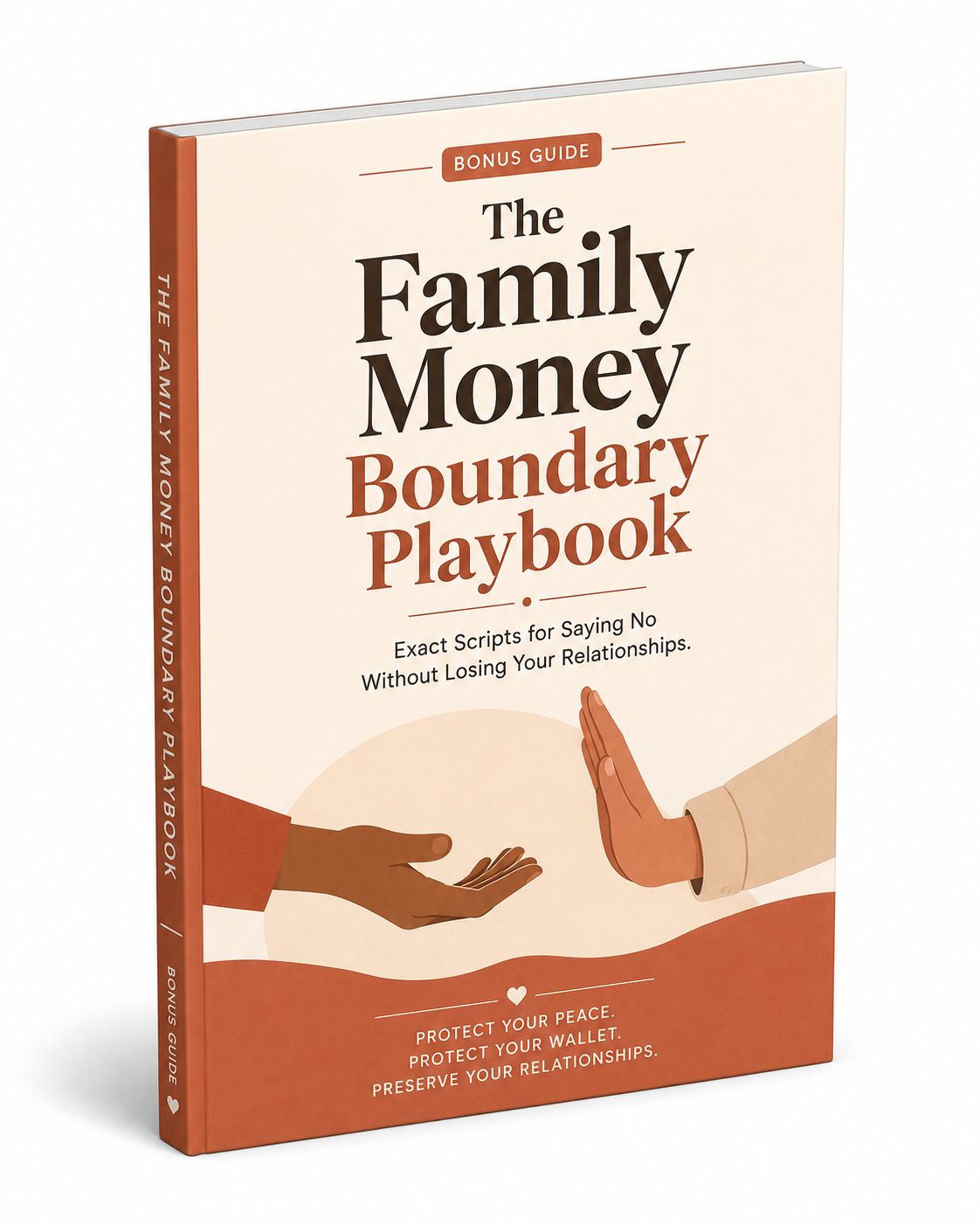
BONUS 1
The Family Money Boundary Playbook
Value: ₦8,000 — FREE today
The #1 reason budgets collapse in Nigeria is a phone call from a relative. This bonus gives you the exact scripts — word for word — to say no to financial requests without losing your relationships or being labelled selfish. Includes specific scenarios: your mother asking for upkeep, a sibling requesting a loan, church levy pressure, and friends asking you to “hold something.”
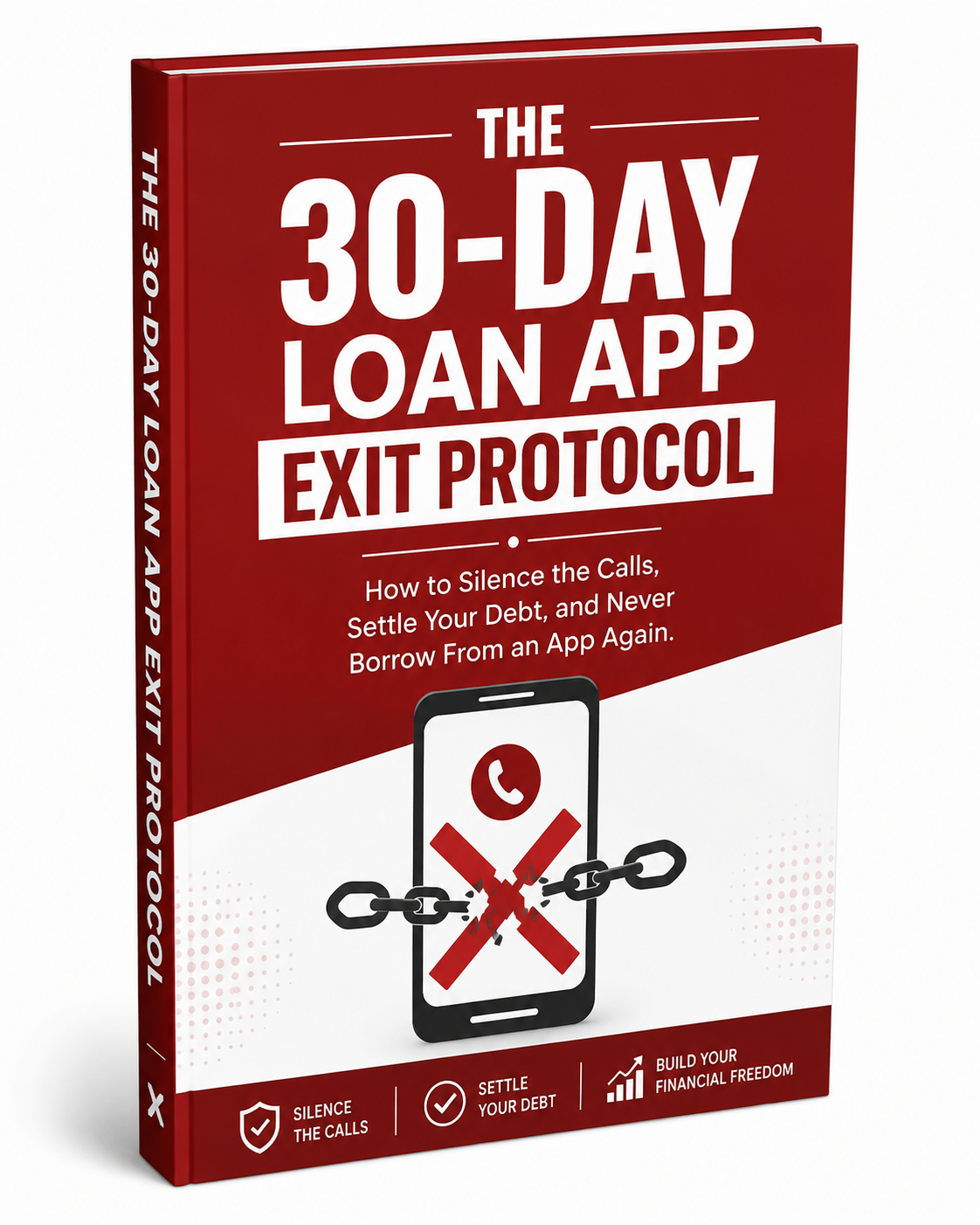
BONUS 2
The 30-Day Loan App Exit Protocol
Value: ₦6,500 — FREE today
If you are currently trapped in the loan app spiral — borrowing from one to pay another, contacts being harassed, living in dread — this bonus gives you the emergency exit. Step-by-step: how to negotiate, how to prioritise, and how to systematically clear loan app debt in 30 days. Includes a day-by-day payoff tracker and exact language to use with lenders.
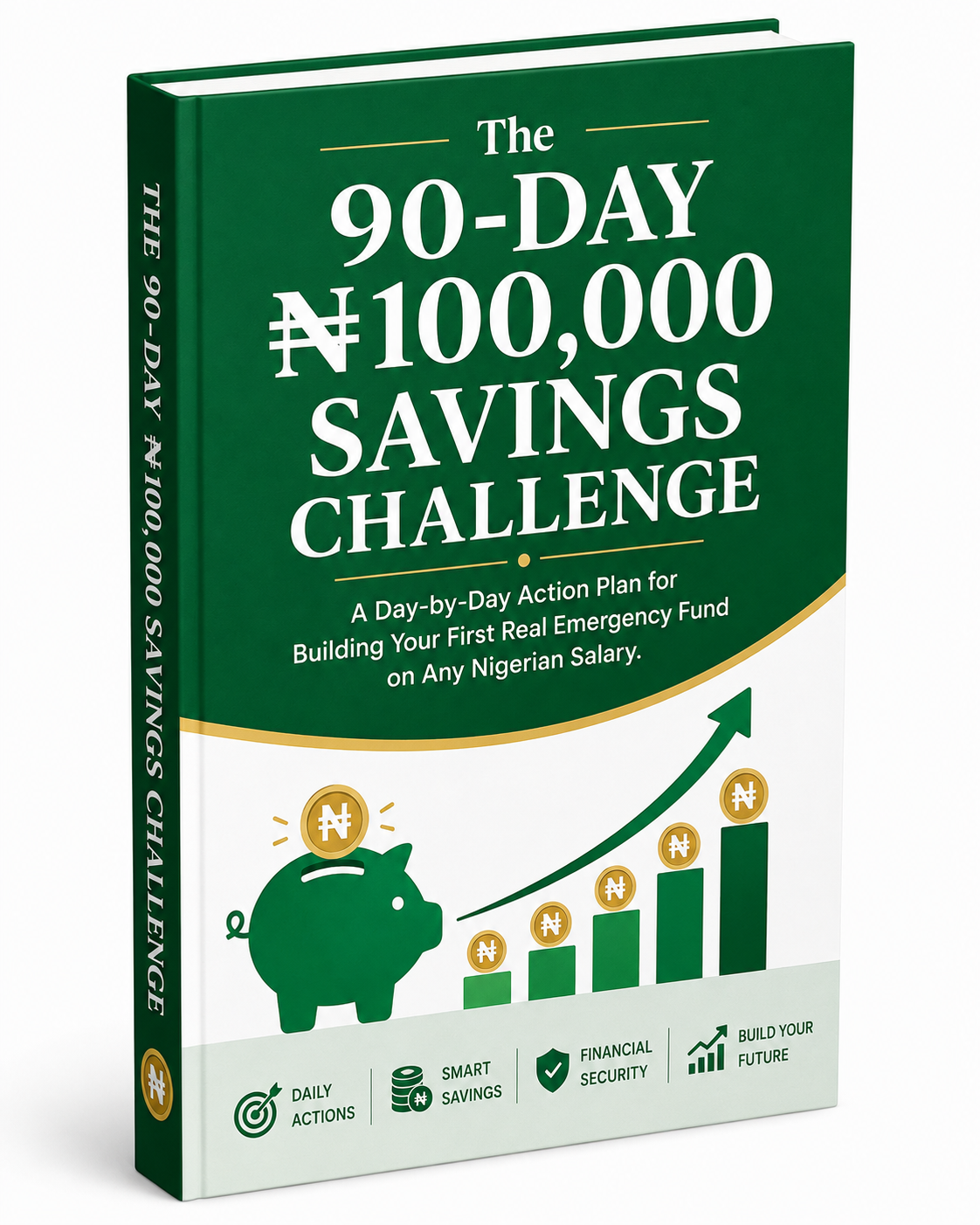
BONUS 3
The 90-Day ₦100,000 Savings Challenge
Value: ₦5,000 — FREE today
Your first major financial milestone: ₦100,000 saved in 90 days on any Nigerian salary. A 90-day savings calendar, weekly check-in prompts, and a milestone tracker. For many people who have never had meaningful savings in their life, this challenge becomes the moment everything clicks.
Everything You Are Getting Today
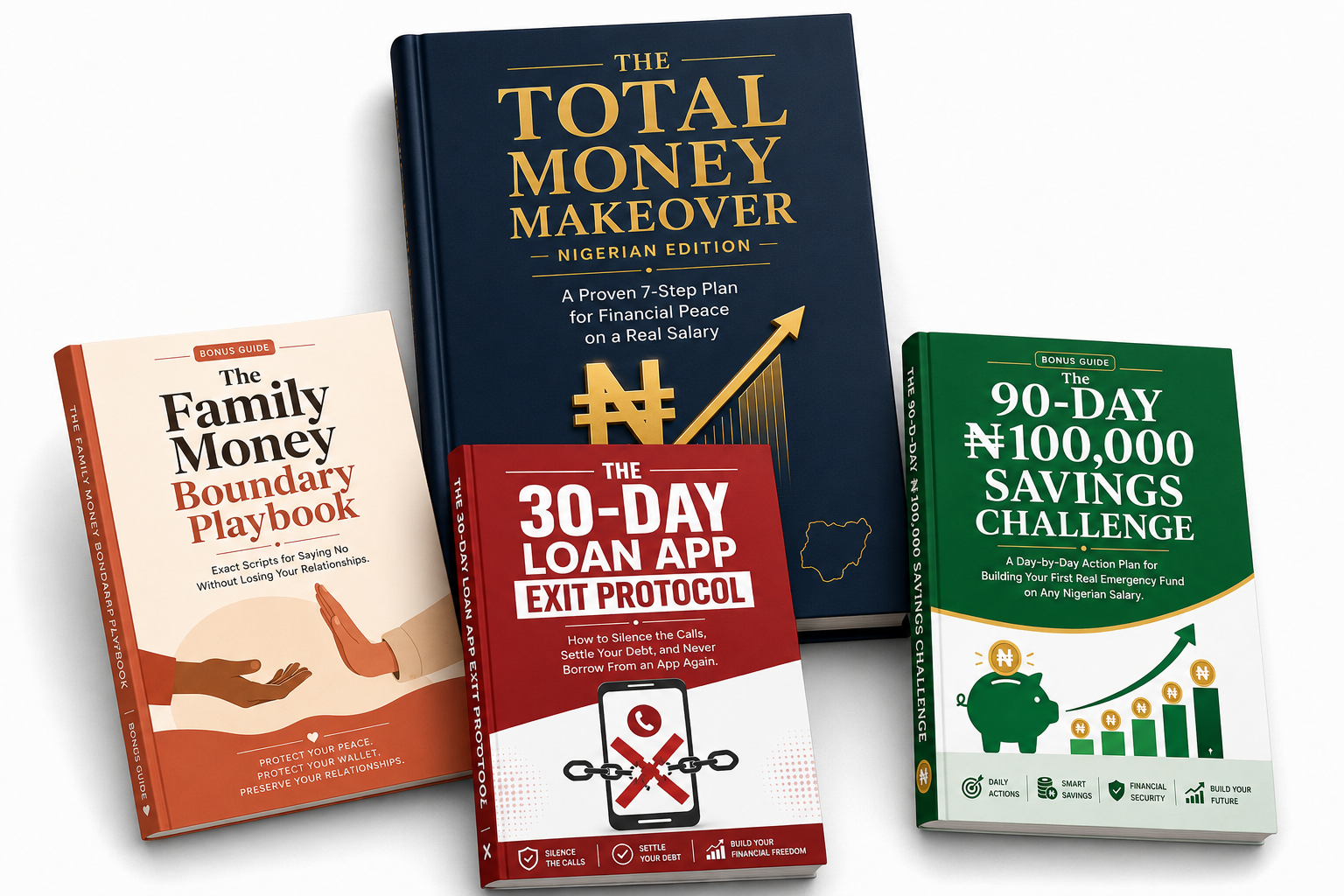
- The Total Money Makeover — Nigerian Edition (Main Guide)
₦12,500 - BONUS 1: The Family Money Boundary Playbook
₦8,000 - BONUS 2: The 30-Day Loan App Exit Protocol
₦6,500 - BONUS 3: The 90-Day ₦100,000 Savings Challenge
₦5,000
Total Value: ₦32,000
You Pay Today: ₦7,500
YES — I Want The Complete Bundle →Right Now, You Have Two Choices
✗ Do Nothing
- Next payday looks the same
- Loan apps keep growing
- Savings never materialise
- Family pressure derails every attempt
- You keep wondering where it all goes
✓ Get The System
- Every naira has a job from day one
- Savings build automatically
- Debt starts shrinking systematically
- Family obligations planned, not panicked
- You know exactly where your money is
The Total Money Makeover — Nigerian Edition + 3 Bonuses
₦12,500 ₦7,500One-time payment • Instant delivery to WhatsApp & Email • First 100 buyers only
✓ 30-Day Money-Back Guarantee
Follow every step for 30 days. If you see absolutely no improvement in your financial situation, I will refund every kobo. No questions. No long emails. No drama. Your purchase today is 100% risk-free.
The only risk is staying exactly where you are.
One Last Thing…
Picture yourself one month from today. Your salary arrives. You do not panic. You do not calculate. You open your notebook and follow the system. Every naira knows where it is going before you spend a single one.
Will you finally go to month end with money still in the account?
Will you look at your savings and feel something you have not felt in years — safety?
Will your partner sit across from you in a money conversation and feel hope instead of dread?
Will you close a loan app for the last time and delete it from your phone?
Will you help a family member from your plan — not from panic — for the first time?
Now picture yourself one month from today if you close this page. Everything stays the same. The same panic. The same calculations. The same arguments. The same borrowing. The same starting from zero.
The difference between those two versions of you is a decision you make in the next sixty seconds.
If you have read this far and you are still hesitating —
Ask yourself honestly: is it that you do not believe the system works? Or is it that part of you does not believe you deserve for it to work for you?
You have been telling yourself the story that you are just “bad with money” for so long that a part of you is afraid to find out it was never true. That the problem was always the missing structure, not something broken in you.
If you cannot invest ₦7,500 in a system that could permanently change how your money moves — how do you expect things to ever be different?
Stop hesitating. Choose yourself. Choose your family. Choose financial peace.
P.S. — Your purchase is fully protected by a 30-day money-back guarantee. Follow the system for 30 days. If nothing changes, I refund every kobo. You have nothing to lose and a completely different financial life to gain.
P.P.S. — This ₦7,500 price is only for the first 100 buyers. Once that counter fills — which it is filling quickly — the price returns to ₦12,500 and the three bonuses are removed. The time to act is right now.
P.P.P.S. — Every day you wait is another month of starting from zero. Another loan app deduction. Another end-of-month calculation. The system is here. Your next salary does not have to look like the last one.
With love for your financial peace,
Ngozi Obi
Frequently Asked Questions
How is the guide delivered after I pay?
Does this work for people outside Nigeria — Ghana, Kenya, South Africa, diaspora?
What if my income is irregular? I am a business owner or freelancer.
What if my salary is very small? Will this still work?
Is the 30-day guarantee real? What if I want a refund?
How is this different from every other finance guide I have seen?
Get The Total Money Makeover — Nigerian Edition Now →
This page is editorial content. Results shared are real testimonials from actual readers. Individual results will vary based on income, circumstances, and consistency of application. This guide is for informational and educational purposes only. © 2025 Money Sense Africa Blog. All rights reserved.
Comments (1,847)
Tunde Afolabi
Lagos, Nigeria • 2 days ago
“I earn well but I'm always broke” was literally my situation for 6 years. Just bought the guide. Will come back with my results. 🙏
♥ Like (214)Ama Asante
Kumasi, Ghana • 4 days ago
Ghana sister here! I was skeptical because everything is always "for Nigerians" but the family obligation section alone is worth 10x the price. My mother calls every month end like clockwork 😂 Now I have a plan for that call. Massive relief.
♥ Like (187)Chisom Okafor
Abuja, Nigeria • 1 week ago
Coming back to say: I made a loan repayment last week from my own money without borrowing from anyone. For three years I was robbing Peter to pay Paul. That cycle is breaking. Thank you Ngozi.
♥ Like (329)David Omondi
Nairobi, Kenya • 1 week ago
Reading from Nairobi. The principles work exactly the same here. What this guide gave me is structure. I now have Ksh 38,000 saved after 7 weeks. I have never had that amount untouched in my account before in my adult life.
♥ Like (156)Siphokazi Dlamini
Johannesburg, South Africa • 2 weeks ago
South African here. Earn in rands. Broke in rands. 😂 The debt section of this guide is exceptional. The debt snowball method explained in an African context — with ubuntu obligations factored in — is something I have never seen anywhere else. Worth 100x the price.
♥ Like (201)Fatima Al-Hassan
London, UK (Nigerian Diaspora) • 2 weeks ago
My husband and I both read this. The diaspora section made me feel like someone finally understood our specific situation. We sat down and did the full budget exercise together. First proper money conversation without it turning into an argument. Genuinely grateful.
♥ Like (278)Babajide Martins
Port Harcourt, Nigeria • 3 weeks ago
I'm a man reading this and I'm not ashamed. My financial situation was causing depression. Downloaded this guide not expecting much. 5 weeks in: two loan apps closed. ₦28,000 in savings. My wife asked me last week what changed. Everything changed. The system changed everything.
♥ Like (412)